

How the Algorithm Killed Tragedy
BookTok, algorithms, and the death of moral complexity in art

Last week, someone on BookTok called Rhysand, the love interest from Sarah J. Maas’s wildly popular A Court of Thorns and Roses series, an abuser, and 40,000 people lost their minds.
The comments became a battlefield. People wrote essay length defenses of a fictional fairy’s behavior in a fantasy novel. Others called fans abuse apologists. Someone made a callout post. The author got tagged 600 times. A teenager received death threats for saying she liked the character.
Over a man who does not exist.
This problem is bigger than fantasy books. It’s about how we’ve lost the ability to tolerate depiction of evil in art and what that collapse means for the future of storytelling itself.
What the Romans Understood
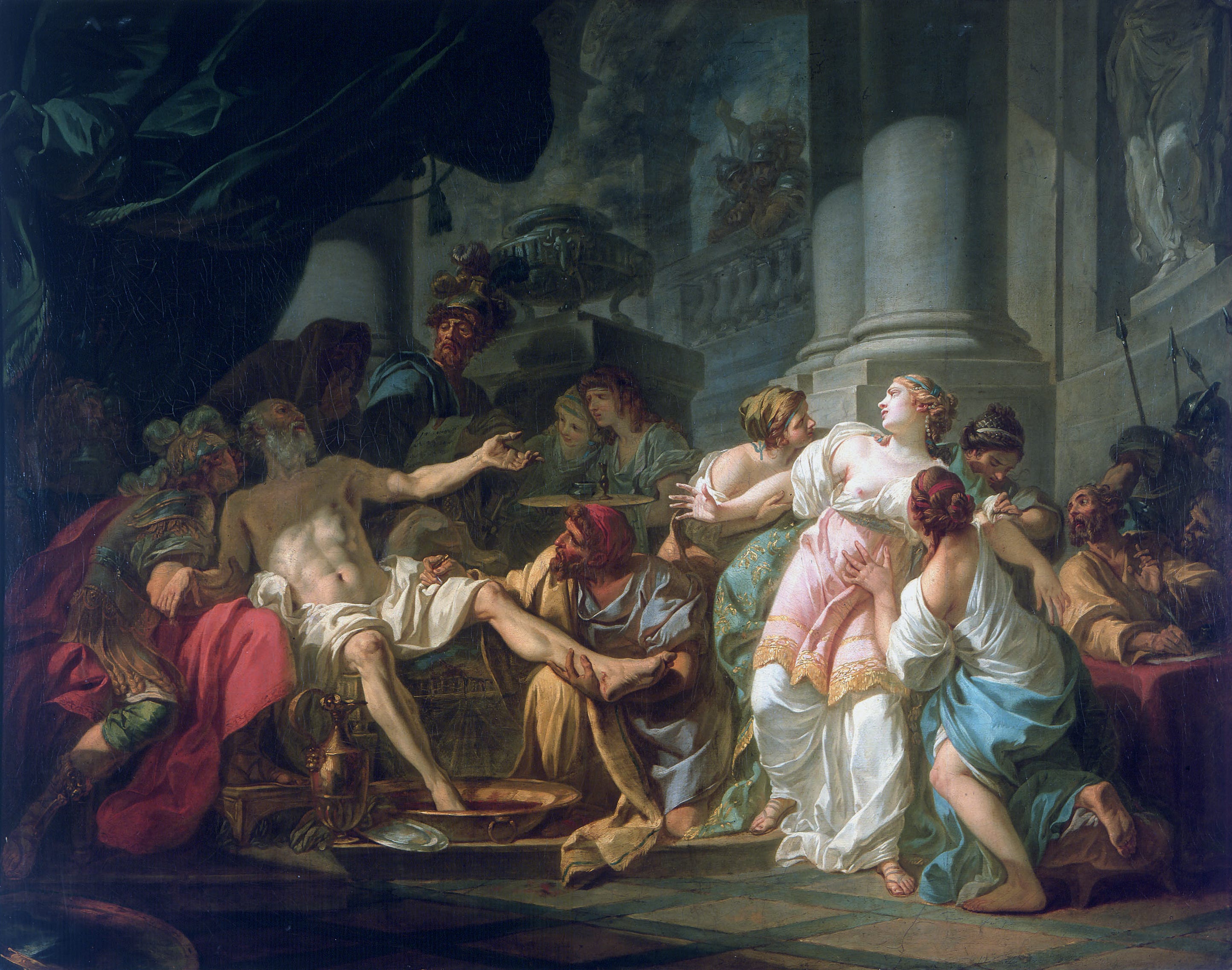
In the first century AD, Seneca wrote plays where Medea murders her children on stage. Where Thyestes unknowingly eats his own sons. These weren’t fringe productions, they were performed as moral instruction, studied by students, discussed by philosophers.
The horror was the point. The depiction of evil WAS the moral lesson. Roman audiences understood something we’ve forgotten: showing evil is not the same as endorsing it.
Art requires bad characters to function as narrative. Tragedy requires transgression. Moral examination requires depicting the immoral.
No one demanded Seneca apologize for Medea’s infanticide. No one accused him of “normalizing” filicide. No one tried to get his plays banned from theaters for lacking trigger warnings. They understood that depicting darkness was how you examined it, how you processed it, how you learned from it.
We’ve lost this. Completely.
The Collapse of Depiction and Endorsement
Somewhere between Seneca and now, we collapsed two distinct categories: depiction and endorsement. Now, if you show it, you support it. If you write a bad character, you are bad. If your protagonist makes immoral choices, you’re teaching readers that immorality is acceptable.
This isn’t limited to books. It’s happening across every art form:
Musicians get cancelled for depicting drug use or violence in their lyrics, as if writing from a character’s perspective means advocating for their choices. Filmmakers have to justify in interviews why villains exist in their movies. Prestige television shows get accused of “glorifying” the exact crimes they’re examining. Artists are expected to add disclaimers, apologize for their characters’ behavior, or worse, stop creating complex, flawed, morally ambiguous work entirely.
The pattern is identical everywhere: depiction has become indistinguishable from endorsement. And this equivalence is killing art.
I’ve watched this happen in real time as a writer. Authors now receive thousands of messages demanding they apologize for their fictional characters’ choices. Readers email publishers trying to get books pulled. Creators add content warnings as a prophylactic apology for depicting anything even mildly uncomfortable. Some writers have stopped writing morally complex characters altogether, not because they don’t want to, but because the harassment isn’t worth it.
The message is clear: if you want to survive as an artist, depict only goodness. Show only moral clarity. Create only characters whose every choice can withstand ethical scrutiny.
Which is to say: stop making art.
Why Did This Happen?
This didn’t emerge from nowhere. There are identifiable sociological and technological forces that created this collapse.
We’re drowning in real atrocities. Real violence, real cruelty, real suffering, unfiltered and constant in our feeds, in real time, with high-definition clarity. We see actual evil every day, everywhere, and we’re powerless to stop most of it. The psychic defense mechanism is to establish rigid moral binaries where we CAN exert control. If we can’t prevent real violence, we can at least make sure no one is allowed to depict violence in fiction. It’s displacement masquerading as activism.
We’ve lost the frameworks that used to help us process evil in narrative. Religion gave us morality plays, parables, stories of sin and redemption. Literary education gave us concepts like “unreliable narrator,” “tragic flaw,” “catharsis.” Cultural rituals gave us shared interpretive tools. These frameworks taught people how to read darkness in art, how to understand that depicting evil was a way of examining it, not celebrating it.
Without these frameworks, people default to literal readings. If it’s shown, it must be endorsed. If the character does it, the author approves. There’s no interpretive distance anymore, no understanding that fiction is a space for moral exploration.
Social media collapsed the distinction between public and private. Your bookshelf used to be personal. Now it’s a public statement. Your Goodreads review is a moral declaration. Your Spotify Wrapped reveals your character. Taste became identity, identity became politics, politics became purity tests.
Every piece of art you consume is now a referendum on who you are as a person. Which means every piece of art that depicts something uncomfortable becomes a threat, not to you personally, but to how others perceive you. Liking the “wrong” book means you’re a bad person. Defending a morally complex character means you’re defending the immoral act itself.
We adopted therapeutic language for normal discomfort. Everything is “harm.” Everything requires “safety.” Everything is “triggering.” Clinical language that used to describe actual trauma now describes any uncomfortable emotion. Seeing evil depicted in art isn’t catharsis anymore, it’s treated as trauma. The idea that discomfort might be valuable, that sitting with moral complexity might be instructive, has been replaced with the assumption that all discomfort is harm and all harm must be prevented.
Creators feel like accessible peers, not distant authorities. When Seneca wrote Medea, he was untouchable. A philosopher, a statesman, separated from his audience by centuries of interpretive distance. When a YA author writes a morally gray character today, readers can DM them. Demand explanations. Expect friendship. The parasocial collapse means authors are no longer seen as artists creating work for examination, they’re seen as influencers making content, and influencers can be held accountable for every message their content sends.
How Technology Amplifies This
The tech layer makes everything worse.
Algorithms optimize for engagement, and nothing drives engagement like moral outrage. The most extreme interpretation of any piece of art, the one that frames it as dangerous, harmful, problematic, gets amplified. Because it’s provocative. The algorithm doesn’t care about nuance. It cares about comments, shares, quote tweets. And “this book romanticizes abuse” gets more engagement than “this book explores a complex relationship.”
The feedback loop is vicious: extreme interpretations get amplified, which trains audiences to read everything through the most uncharitable lens possible, which makes future extreme interpretations more likely, which gets amplified further. We’re selecting for puritanical readings of art because puritanical readings drive engagement.
Content moderation compounds the problem. Platforms are terrified of being blamed for “harmful content,” so they create policies that can’t distinguish between depicting evil and endorsing it. An AI can’t understand the difference between Seneca depicting infanticide as tragedy versus someone advocating for child murder. So platforms ban both, or neither, or create impossible to parse guidelines that creators navigate through self censorship.
Then there’s decontextualized distribution. Art now travels as clips, screenshots, 30-second TikToks, pull quotes divorced from narrative context. A morally complex scene that makes sense in a three hour film becomes “problematic” when it’s a 15-second clip. A character’s arc of redemption becomes invisible when all anyone sees is the single worst thing they did, posted with the caption “this is what [author] thinks is romantic.”
The narrative frame that made the darkness legible as darkness gets stripped away. All that’s left is the dark moment itself, presented as if it exists in isolation, as if it represents the whole.
This is happening across every platform that distributes art. Music on Spotify and TikTok. Film and TV on streaming services that promote based on engagement metrics. Books on BookTok and Goodreads. The infrastructure of how we encounter art now is fundamentally incompatible with moral complexity.
What We Lose
When you can’t depict evil, you can’t make art. It’s that simple.
Stories require conflict. Conflict requires characters making bad choices, acting from base motives, doing things that are cruel or selfish or destructive. If every character must be morally pure, if every choice must be defensible, if every relationship must model healthy communication, you don’t have a story. You have a manual. You have propaganda.
Art is how we examine the parts of human experience that are too dangerous, too painful, too complex to examine directly. It’s the safe space for exploring darkness, not because the darkness isn’t real, but because the consequences aren’t. Fiction lets us ask: what would I do in that situation? How does someone become that kind of person? What does it feel like to make an unforgivable choice?
These questions are essential. They’re how we build empathy, how we understand evil, how we develop moral reasoning beyond simplistic binaries. And you can’t ask them if you’re not allowed to depict the situations that raise them.
The irony is that refusing to depict evil makes us less equipped to recognize and resist real evil. If you’ve never sat with moral complexity in fiction, if you’ve never seen how good people make bad choices, if you’ve only encountered cartoonish villains who are evil because the story needs a villain, you have no framework for understanding how real atrocity happens. You don’t understand how ordinary people become complicit. You don’t recognize the early signs. You can’t imagine yourself in that position.
Art that depicts evil isn’t dangerous. Art that refuses to is.
Signs of Resistance
But there are cracks in the consensus. Some creators are pushing back. Prestige TV is getting darker again, shows that refuse to moralize, that let characters be genuinely complex. Independent publishers are taking risks the big houses won’t. Substack and Patreon are creating economic models where artists can bypass algorithmic gatekeepers and speak directly to audiences who want complexity.
The resistance is small, scattered, but it’s there. The question is whether it can scale, or whether it remains a niche for people willing to opt out of the mainstream entirely.
What This Means for the Next Era
We’re creating a generation of artists who self censor before they create. Government censorship requires infrastructure. Audience censorship is more effective. It just requires a platform and a pile on.
When the business model of attention rewards outrage, the culture of storytelling shifts toward moral literalism. Platforms monetize purity. The safest interpretation is the one that spreads fastest. The market selects for art that offends no one because it’s algorithmically safer. The future of cultural production is being shaped not by aesthetics or ethics, but by engagement metrics.
Outrage is profitable; nuance is not.
This is the quiet censorship of the algorithmic age. The censor’s red pen becomes the invisible hand of incentive design. Instead of being told what not to make, we’re taught, through reward structures, what not to risk.
When you can’t depict evil, you can’t make art. And when you can’t make art, you can’t understand yourself.
But this isn’t irreversible.
The next era of great art will belong to those who refuse purity. To the artists who risk complexity in systems built for simplicity. To the audiences willing to sit with discomfort without demanding apology. The platforms won’t fix this. The audiences will have to.
Because art trains culture. And if we want a culture capable of recognizing real evil when it appears, we need stories brave enough to show it.
Relearning how to read, not what to read, might be the next great cultural revolution.
There’s been a clear shift in the way we interact with art in the last 5-10 years that has really destroyed the integrity of creation. The line between appreciation and acceptance has blurred to the point of disappearance. That’s why we don’t get strong morally gray or even understandable evil characters. Because your appreciation of the author’s creation becomes your moral hill to die on in the eyes of people that just can’t stand to enjoy an art for all its parts. No conflict, no redemption arc, no substance, and ultimately no art. Very well written analysis by you and looking forward to more.