

The Builder’s Canon
What to read before you build

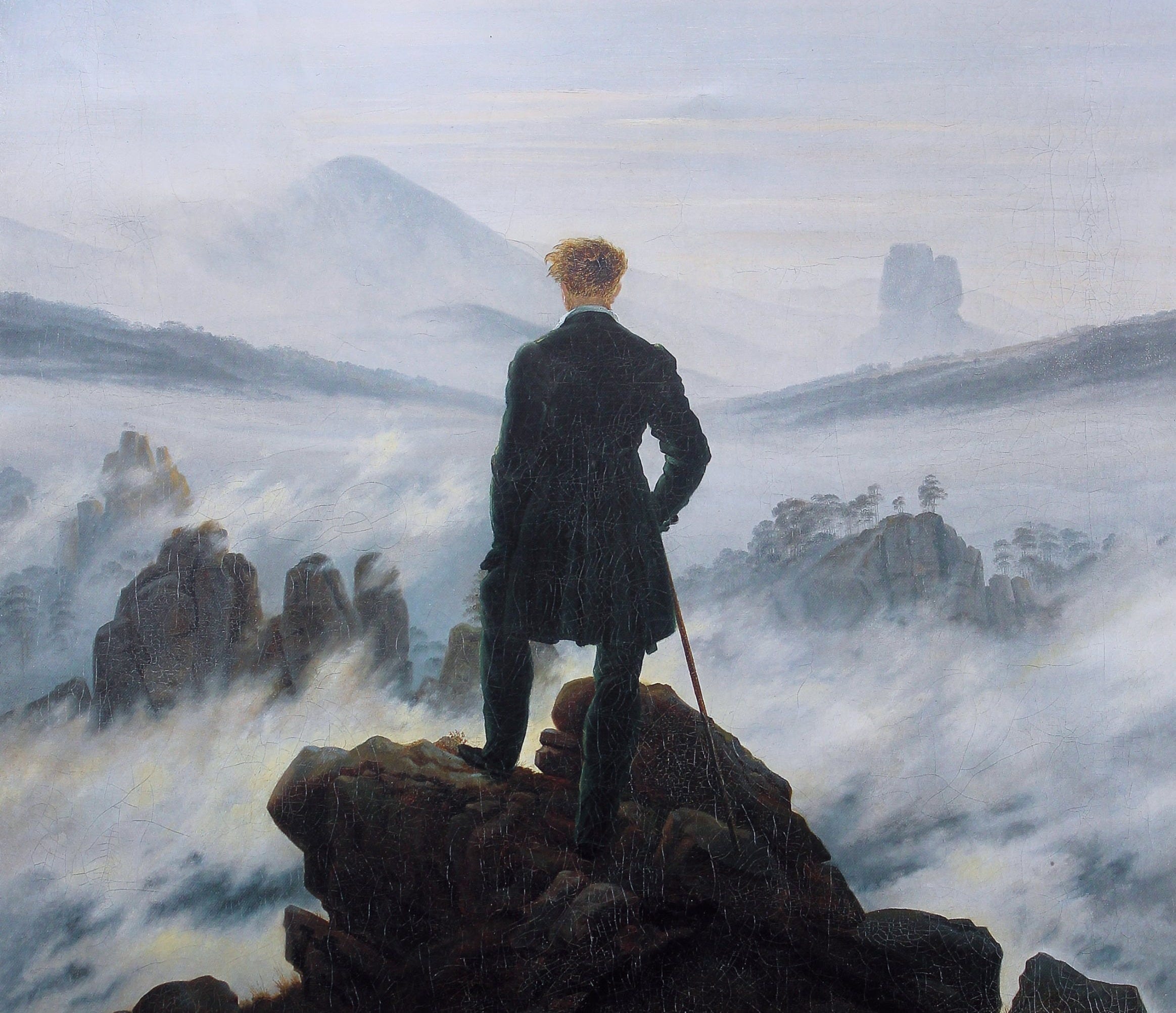
Most founders don’t read fiction.
They read business books, technical papers, competitor blogs. Fiction feels like a detour. Nice for vacation, irrelevant to shipping.
This is a mistake.
The best science fiction is rehearsal. Writers spent decades working through the implications of technologies that didn’t exist yet, the social fallout, the edge cases, the human reactions, the failure modes. They stress tested futures in narrative form so you don’t have to discover the problems in production.
When you’re building something new, you’re introducing a technology into a culture that already has feelings about it. Those feelings were shaped by stories. Your users watched the same movies, read the same books, absorbed the same mythology. Directly or indirectly. They’re already primed to react in certain ways.
Knowing the canon means knowing what you’re building into. The hopes, the fears, the patterns people expect. You can build with the mythology or against it, but you can’t ignore it.
How to Read This List
Pick the category you’re building in. Read two or three. Notice what the writers got right, what they got wrong, what they couldn’t have imagined.
Pay attention to the fears. Your users inherited them.
Pay attention to the hopes. Your marketing can speak to them.
Pay attention to the edge cases. Your product will encounter them.
Building in AI?
Neuromancer, William Gibson (1984)
The book that invented “cyberspace” and shaped how we think about human-computer interfaces. Gibson wrote about AI as alien intelligence, incomprehensible and indifferent. If you’re building AI products, understand that this is the aesthetic your users absorbed.
I, Robot, Isaac Asimov (1950)
The Three Laws of Robotics are the first alignment research, written as fiction. Every story is about edge cases, what happens when your safety constraints conflict, when good intentions produce bad outcomes. Required reading for anyone thinking about AI governance.
Her, by Spike Jonze (2013)
Yes, it’s a film. Watch it anyway. The most honest exploration of what emotional relationships with AI actually feel like, the intimacy, the dependency, the inevitable asymmetry. If you’re building AI companions, assistants, or anything with a voice, this is your user research.
Permutation City, by Greg Egan (1994)
What happens when you can copy minds? Egan thinks through digital consciousness more rigorously than any philosopher. It’s dense and uncomfortable. Read it before you build anything involving identity persistence or digital selves.
The Moon is a Hard Mistress, by Robert Heinlein (1966)
A sentient computer helps colonists revolt. The AI here is a character. They’re funny, political, and quite opinionated. Useful counterweight to the “AI as threat” narrative. Sometimes the machine is on your side.
Ubik, by Philip K. Dick (1969)
Reality degrades. Nothing is what it seems. Dick’s most disorienting novel and his most relevant to AI hallucination, simulation, and the question of what’s real when systems mediate everything. Weirder and better than Do Androids (imo).
A Fire Upon the Deep, by Vernor Vinge (1992)
Intelligence has geography. Zones where different levels of cognition are possible. Vinge invented the concept of the technological singularity and then wrote the best novel about its implications. Essential for anyone thinking about intelligence gradients and capability thresholds.
Building in Robotics?
Do Androids Dream of Electric Sheep?, by Philip K. Dick (1968)
Dick skips the “can machines think” question and goes straight to: does the distinction between human and artificial matter if you can’t tell the difference? He’s interested in empathy as the last boundary and whether that boundary holds.
The Caves of Steel, by Isaac Asimov (1954)
A detective story where the partner is a robot. Asimov works through human-robot collaboration, the anxiety of replacement, the slow process of trust. The workplace dynamics are more relevant than the murder mystery.
R.U.R., by Karel Čapek (1920)
The play that invented the word “robot.” Czech, strange, a century old. The original robot uprising and the original questions about labor, creation, and what we owe the things we make.
The Silver Metal Lover, by Tanith Lee (1982)
A girl falls in love with a robot built for entertainment. The question isn’t whether he’s conscious—it’s whether it matters. Lee wrote the template for human-robot romance that everything from AI companions to Westworld is still running on. Cult classic, underread, ahead of its time.
Building in Biotech?
Brave New World, by Aldous Huxley (1932)
Genetic engineering, pharmaceutical control, designed castes. Huxley’s dystopia runs on optimization. Everyone’s happy. That’s the horror. Essential for anyone building in longevity, enhancement, or reproductive tech.
Flowers for Algernon, by Daniel Keyes (1966)
Intelligence enhancement, told from inside. The arc, from limited to genius to decline, is devastating. Anyone building cognitive enhancement needs to sit with this book’s questions about identity and dignity.
The Island of Doctor Moreau, by H.G. Wells (1896)
A scientist surgically reshapes animals into almost humans on a remote island. Wells wrote the original bioethics horror, what happens when creation is driven by curiosity without constraint. The creatures suffer, the creator rationalizes, and no one asks permission. Still the template.
Blood Music, by Greg Bear (1985)
A scientist injects himself with intelligent cells. They start optimizing him from the inside. Bear wrote biological transformation at the cellular level before anyone was talking about CRISPR or synthetic biology. The body as platform. Weird, rigorous, ahead of its time.
Building in VR/Spatial?
Snow Crash, by Neal Stephenson (1992)
The Metaverse, named and defined. Stephenson invented the vocabulary: avatars, virtual real estate, the social logic of shared digital space. If you’re building in spatial computing, this is the mythology your users carry.
Neuromancer, by William Gibson (1984)
Listed under AI too, but the cyberspace sequences belong here. Gibson’s vision of jacking into the matrix shaped everything that came after. The aesthetic of virtual space starts here.
True Names, by Vernor Vinge (1981)
A novella that predates cyberpunk. Vinge imagines virtual identity, online personas, the gap between who you are and who you appear to be. Short, foundational, largely forgotten.
The Peripheral, by William Gibson (2014)
Remote presence across timelines. Gibson’s late career work on how virtual embodiment changes identity and agency. A more recent pick that earns its place, he’s still ahead of everyone.
Building Consumer Social?
We, by Yevgeny Zamyatin (1924)
The dystopia that inspired 1984. A society of total transparency, glass walls, scheduled sex, no privacy. Zamyatin wrote about the tyranny of forced openness a century before social media. (This was 1924. 1924!!! Kafka was still alive. Radio was new. And he nailed it.)
The Machine Stops, by E.M. Forster (1909)
A short story from 1909 about people who live in isolated pods, communicating only through screens, dependent on a system they no longer understand. Forster saw it coming before the telephone was widespread.
The Space Merchants, by Frederik Pohl & C.M. Kornbluth (1953)
Advertising runs the world. Corporations own everything, consumers are addicts by design, and attention is the only resource that matters. Pohl and Kornbluth wrote influencer culture, engagement metrics, and manufactured desire in 1953. This one is satirical and absurdly prescient.
Stand on Zanzibar, by John Brunner (1968)
Overpopulation, information overload, media fragmentation. Brunner’s fragmented narrative style mirrors the content saturated world he’s describing. Predicted viral culture, influencers, and attention scarcity.
Building in Crypto/Web3?
Cryptonomicon, by Neal Stephenson (1999)
The prehistory of crypto, codebreaking, data havens, anonymous currencies. Stephenson understands the cypherpunk ethos from inside. Digressive and essential.
The Moon is a Harsh Mistress, by Robert Heinlein (1966)
Listed under AI too, but the politics belong here. A lunar colony revolts using decentralized coordination. Heinlein thinks through trustless systems, revolutionary economics, and governance without central authority.
Foundation, by Isaac Asimov (1951)
Psychohistory, predicting and shaping society at scale using mathematics. Asimov’s vision of modeling human behavior influenced prediction markets, mechanism design, and anyone who thinks you can engineer social outcomes.
The Shockwave Rider, by John Brunner (1975)
A hacker on the run in a networked surveillance state, using information as weapon and currency. Brunner coined “worm” for self-replicating code and wrote the cypherpunk playbook before the term existed. It covers anonymity and identity and depicts the idea of resistance through data. Very much forty years ahead of its time.
The Meta-Canon
These are about how to think about building futures.
Frankenstein, by Mary Shelley (1818)
The first science fiction novel, and still the most essential. A man builds something new, refuses to take responsibility for it, and watches it destroy everything he loves. The creator’s abandonment drives the tragedy. Shelley was nineteen when she wrote it.
The Stars My Destination, by Alfred Bester (1956)
A man left for dead in space survives on pure rage and spends the entire book getting revenge. Teleportation, corporate syndicates, class warfare, and face tattoos. Bester wrote with speed and fury, proto-cyberpunk decades before Gibson.
A Canticle for Leibowitz, by Walter M. Miller Jr. (1959)
Civilization destroys itself. Monks in the desert preserve scraps of knowledge, circuit diagrams, shopping lists, without understanding what they mean. Centuries pass. Civilization rebuilds, advances, destroys itself again. Miller wrote the long cycle: creation, hubris, collapse, repetition. The only novel he ever finished.
Dune, by Frank Herbert (1965)
Ecology, religion, politics, economics, all tangled together across centuries. Herbert was interested in systems, how power moves, how prophecy gets weaponized, how even the best intentions create catastrophe three generations later.
The Left Hand of Darkness, by Ursula K. Le Guin (1969)
An envoy visits a planet where people have no fixed gender. Le Guin doesn’t explain it away or make it comfortable. The strangeness stays strange. A book about what it actually takes to understand someone genuinely different from you, slowly, imperfectly, and with no shortcuts.
1984, by George Orwell (1949)
Surveillance, thought control, and language as weapon. Orwell’s warnings have been quoted so often they’ve lost their edge. Read it again anyway. Winston knows the Party is lying. He just can’t hold onto the truth. Resistance becomes impossible to sustain.
Fahrenheit 451, by Ray Bradbury (1953)
Everyone remembers the book burning. What they forget is that the government didn’t start it. People stopped reading on their own. They wanted faster entertainment, shorter content, less discomfort. The firemen came later, to finish what the culture already chose.
The Dispossessed, by Ursula K. Le Guin (1974)
An anarchist society on a barren moon. A capitalist society on the lush planet below. A physicist who moves between them. Le Guin doesn’t make it easy, both systems work, both systems fail, both extract costs from the people inside them. A book about what any utopia actually requires, and what it gives up.
The stories came first. Now you’re building the reality.
Know the canon.
Another amazing peice ❤️❤️